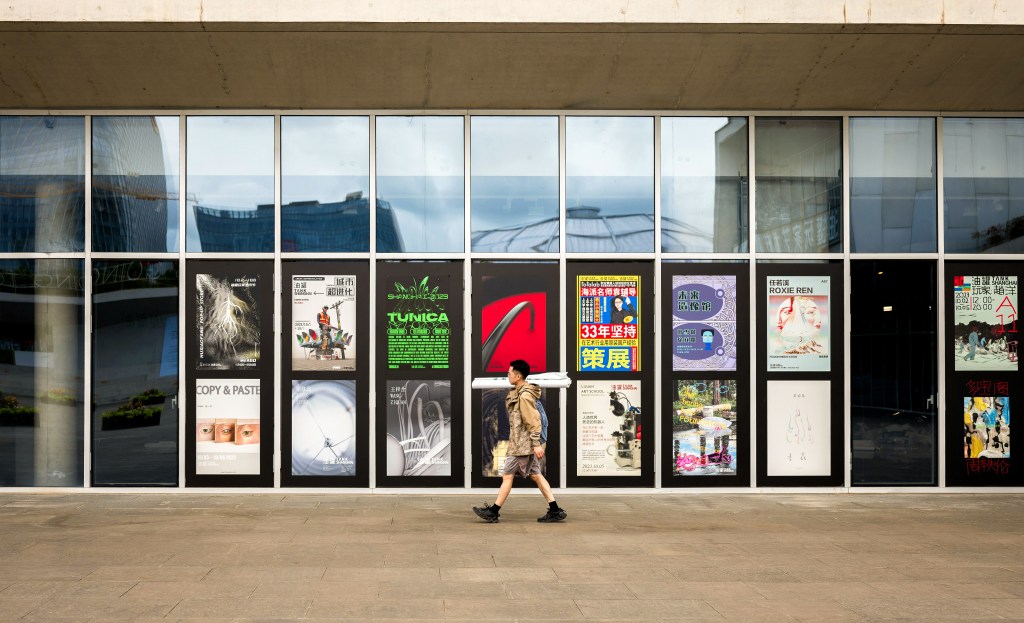
Retail media refers to advertising within a retailer’s ecosystem, both online and in-store, allowing brands to reach consumers at critical points in the shopping journey.
For years, that promise has defined the channel. Retail media has largely been framed as a lower-funnel lever—optimised for ROAS, conversions, and incremental revenue. And in many ways, it has delivered.
But as investment accelerates and retail media claims a larger share of media budgets, senior marketers are starting to ask harder questions:
- Does retail media actually build brands?
- Are we optimising short-term sales at the expense of long-term growth?
- How do we prove brand impact inside retail environments?
Retail media is entering its next phase—one where brand building matters just as much as immediate performance. And to unlock that future, advertisers need better ways to measure what really happens in consumers’ minds when they encounter brands in retail ecosystems.
How retail media became a performance-first channel
Retail media’s origins naturally positioned it as a performance channel.
Early retail advertising formats—sponsored search results, product listings, onsite display—were designed to intercept shoppers at moments of high intent. Measurement followed suit. Retailers could connect ad exposure to basket data, enabling brands to see downstream sales in near-real time. ROAS, cost per acquisition, and revenue quickly became the dominant currencies.
This performance-first framing brought clear advantages:
-
Accountability: spend could be tied directly to transactions.
-
Speed: campaigns could be optimised quickly based on sales signals.
-
Commercial confidence: finance teams could justify budget with concrete numbers.
But that same framing also created blind spots. When success is defined almost exclusively by immediate sales, any effect that unfolds over weeks or months—awareness, preference, consideration—risks being ignored.
Why performance metrics alone are no longer enough
Short-term metrics are powerful, but they tell only part of the story.
Over-optimising to conversion can lead to diminishing returns, as brands repeatedly target the same high-intent shoppers while missing opportunities to influence future buyers. It can bias spend toward promotions or tactical messages rather than distinctive brand storytelling. And it can obscure whether retail media is attracting new customers or merely capturing demand that would have occurred anyway.
More broadly, focusing solely on transactional KPIs risks undervaluing the role of advertising in driving long-term growth. Decades of advertising effectiveness research have shown that sustainable brand building is what fuels future sales because it creates mental availability, emotional connection, and familiarity.
As retail media budgets grow to rival those of traditional upper-funnel channels, leadership teams increasingly want proof that this spend contributes to brand equity, not just quarterly revenue.
Retail media’s role in modern brand building
Far from being incompatible with brand objectives, retail media environments may actually be uniquely powerful for brand building.
Retail platforms combine several distinctive advantages:
- High attention: shoppers are actively browsing, comparing, and evaluating products.
- Strong context: brand messages appear next to categories, competitors, and prices.
- Commercial relevance: exposure happens at moments when purchase decisions feel imminent.
In these moments, advertising does more than trigger a click. It can shape perceptions of quality, value, and differentiation. It can reinforce memory structures that influence not only today’s basket but tomorrow’s brand choices.
Upper-funnel effects—such as awareness, ad recall, and consideration—do not disappear simply because media runs close to checkout. They may in fact become more potent when messages are delivered at the point of decision.
What brand building looks like in retail media
Brand building in retail media is not about abandoning performance. It is about expanding the definition of success.
Within retail environments, brand effects can take several forms:
- Visibility and familiarity: repeated exposure to a brand within a category builds recognition and mental availability.
- Message reinforcement: creative that communicates positioning, quality cues, or sustainability credentials can shift perception.
- Future preference: shoppers may not convert immediately but may remember the brand later, online or in-store. And a strong brand presence can reduce sensitivity to competitors’ promotions or price changes.
These outcomes are harder to capture in a sales dashboard, but they play a crucial role in shaping future demand.
Benchmark data — the kind captured in ongoing retail media analytics — reinforces this dual role of retail media. Compared with the average across all campaigns, retail media delivers:
- Stronger brand attribution, with scores three points higher than the benchmark.
- Improved brand positioning and image, outperforming other campaign types by two points.
- Greater ability to drive action, with intent-to-act metrics four points above average.
- Higher purchase intent, sitting one point above the overall benchmark.
Taken together, these results show that retail media is not only effective at converting existing demand. It also meaningfully strengthens how brands are perceived, supporting future growth as well as immediate sales.
The measurement gap in retail media brand building
If brand effects are real, why are they so rarely discussed in retail media reporting?
Part of the answer lies in how retail platforms are structured. Retailer dashboards are typically designed around commerce outcomes: impressions, clicks, sales, new-to-brand buyers. These are valuable, but they are not brand metrics.
There is also a lack of standardisation across networks. One retailer’s definition of “new customer” or “incrementality” may differ from another’s, making it difficult to compare performance or build a holistic view of brand impact.
Most importantly, proving changes in consumer perception requires more than platform-reported logs. It requires asking people—real consumers—what they recall, what they think, and how their attitudes have shifted.
Without independent, people-based measurement, brand building inside retail media remains largely invisible.
Why brand lift is critical to retail media brand building
This is where brand lift measurement becomes essential.
In a retail media context, retail media brand lift refers to the incremental change in brand metrics—such as awareness, ad recall, consideration, or preference—among people exposed to advertising compared with a similar group who were not exposed.
This exposed-versus-control methodology is crucial. It isolates the effect of advertising from background noise: existing brand strength, seasonal demand, or competitive activity. Instead of asking whether exposed consumers converted, it asks what changed because they were exposed.
Brand lift studies can reveal:
- whether campaigns increase recognition within a category
- which creatives drive stronger recall
- how messaging influences consideration
- whether exposure shifts perceptions of value or quality
In doing so, they surface the incremental impact of retail media on consumer minds—not just baskets.
For brands under pressure to justify spend beyond short-term ROAS, these signals are often the missing layer. They transform retail media from a purely tactical channel into one that can credibly contribute to long-term brand growth.
Using brand lift to guide retail media strategy
Once brand lift is part of the measurement framework, retail media strategy changes.
Instead of judging campaigns solely on revenue, advertisers can begin to understand what is working at a deeper level:
- Creative: Which messages drive the strongest ad recall or consideration? Are promotional messages crowding out brand storytelling?
- Formats: Do video placements outperform sponsored listings on awareness? Which surfaces best support upper-funnel goals?
- Placements: How does impact vary between homepage takeovers, category pages, or offsite retail media inventory?
- Balance: Are performance-heavy activations being complemented with brand-focused campaigns that build future demand?
This broader lens helps marketers optimise not only for immediate outcomes, but for sustainable growth—aligning retail media with the same strategic discipline applied to other major channels.
Connecting retail media brand impact to the wider media mix
Retail media doesn’t operate in isolation. It sits within a broader marketing ecosystem alongside social, video, audio, and display. Yet most brands measure it separately, creating a fragmented view of what’s actually working.
Trusted measurement solutions like Happydemics enable brands to evaluate retail media within a unified framework. By surveying real consumers and comparing exposed versus control groups, you understand how retail media contributes to brand-building objectives as part of an integrated strategy.
This holistic approach reveals what matters: how retail media influences perception versus other channels, where to allocate incremental spend, whether brand narratives land consistently, and what effects are truly unique to retail environments. Most importantly, it gives leadership teams the evidence they need to balance short-term sales with long-term brand building across their entire media mix.
Conclusion: retail media’s strategic future
Retail media is no longer just a conversion engine. As budgets rise and networks mature, its role in shaping brand growth is coming into sharper focus.
Performance metrics will always matter. But on their own, they cannot capture the full value of advertising in high-attention retail environments. Brand lift—measured independently, with people-based methodology—is becoming essential to understanding retail media’s true impact.
For brands willing to look beyond ROAS, the opportunity is significant: a channel that not only drives today’s sales, but also builds tomorrow’s demand.
Discover how Happydemics helps brands measure brand building impact within retail media through independent brand lift studies.